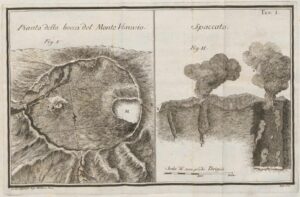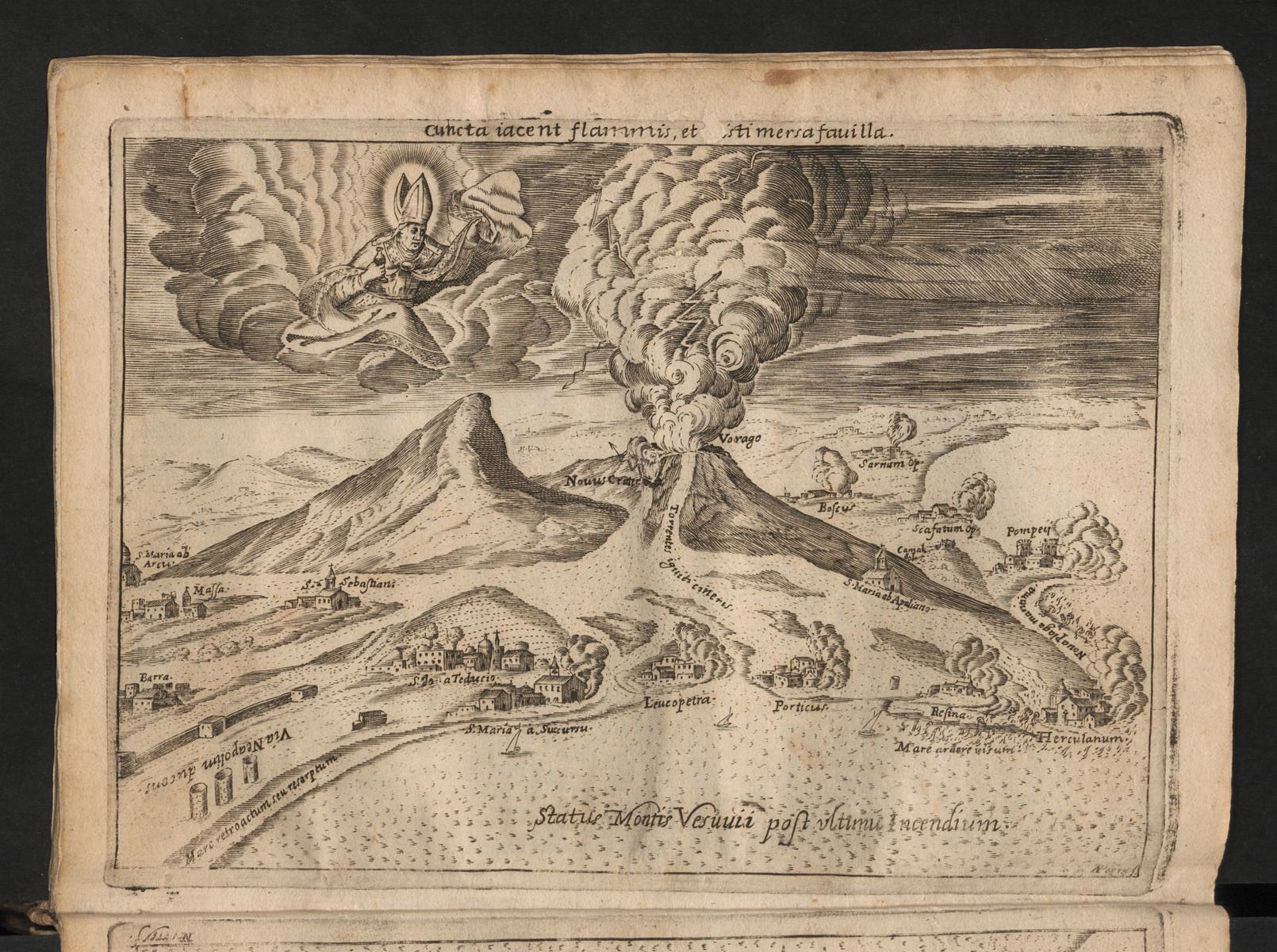
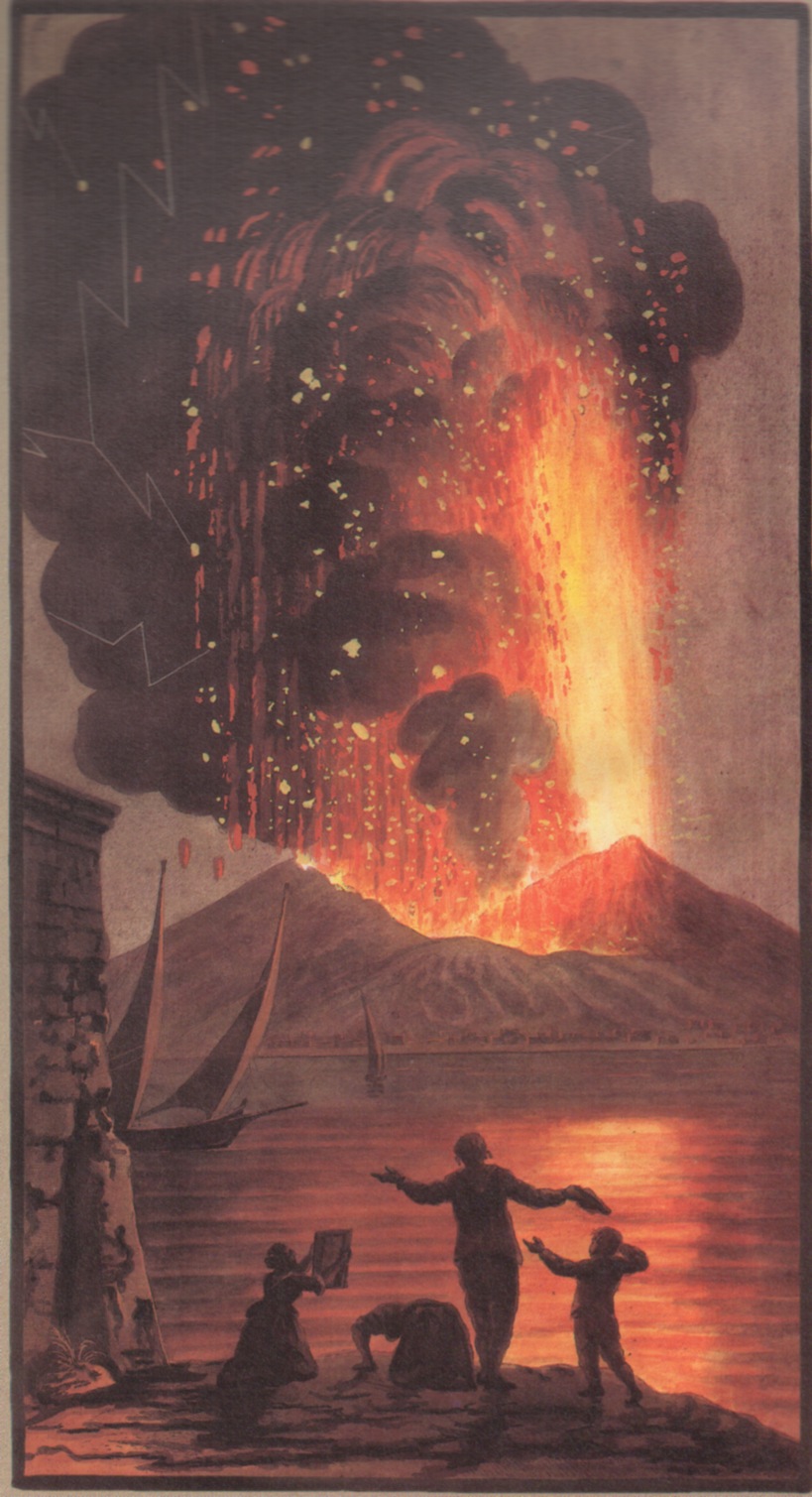
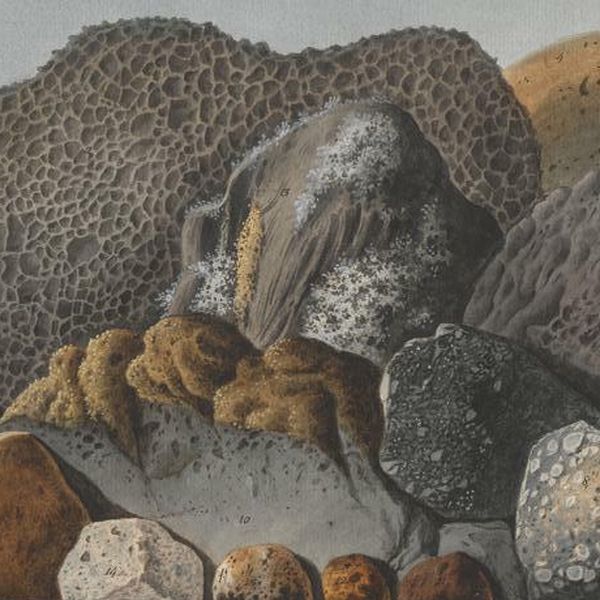
The site explores, from the perspectives of the history of science and art, the iconography of volcanoes between the seventeenth and nineteenth centuries. It examines the scientific theories and practices reflected in volcanic imagery, as well as their historical significance in the emergence of geology as a scientific discipline.
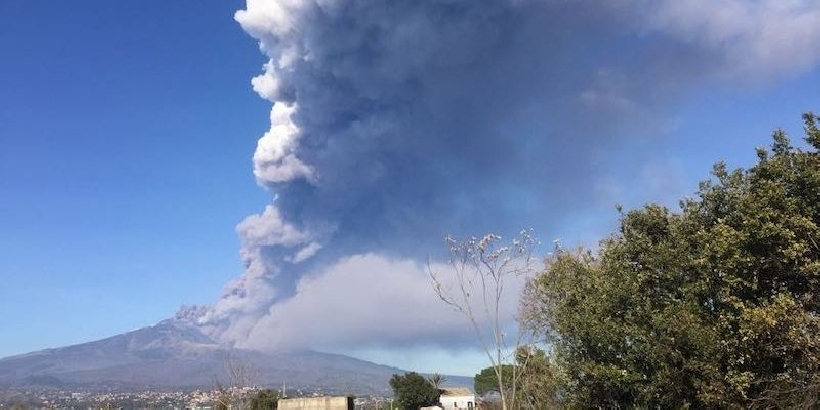
Some of these images, dating back to a period when modern geology was still emerging, have been used by contemporary volcanologists as sources of technical data to reconstruct the eruptive histories of volcanoes.
Others have attracted the attention of art historians primarily for their aesthetic qualities.
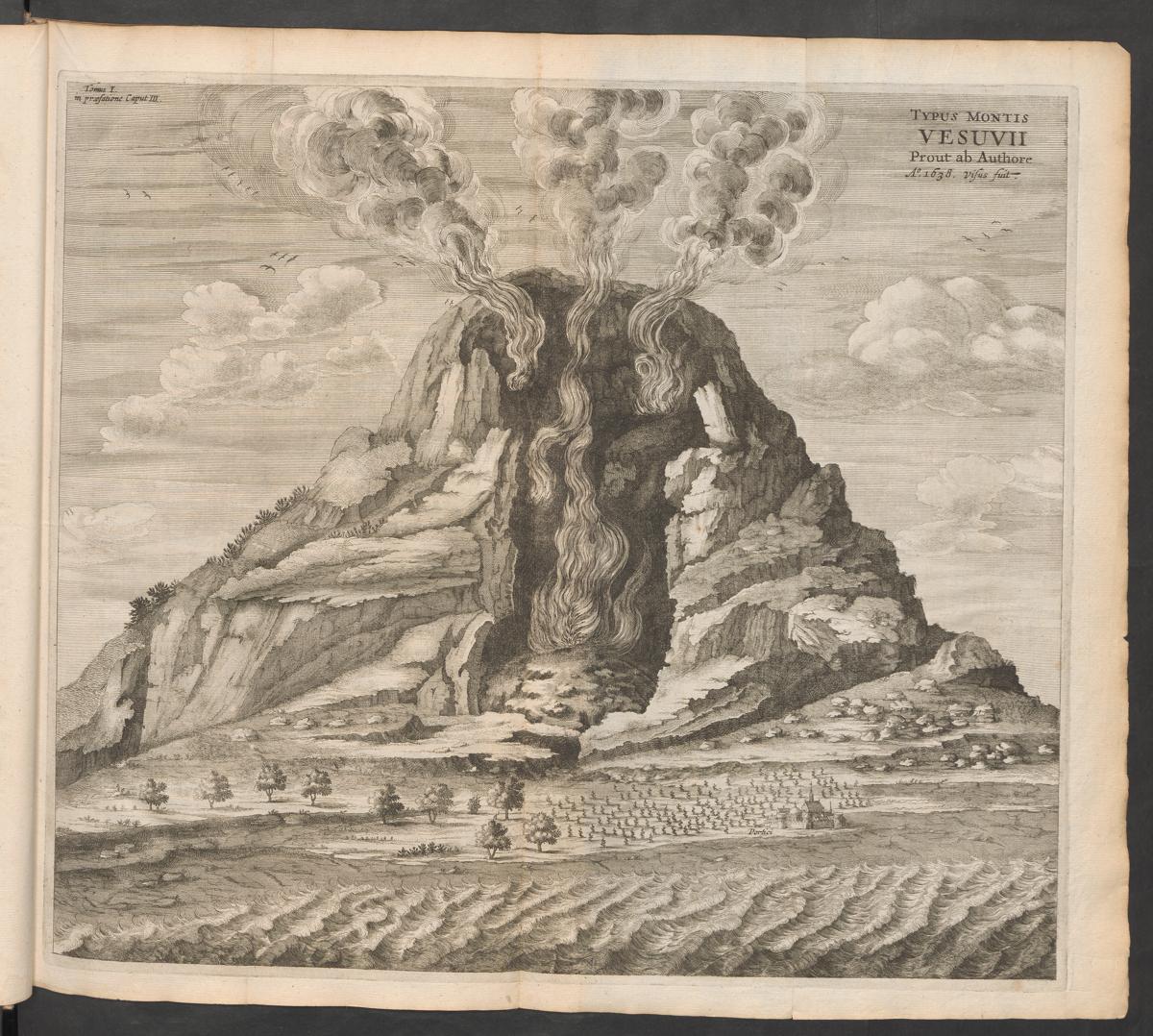
Vesuvio 1638
However, a systematic investigation of their role in the history of Earth sciences and art history is still lacking. This database aims to address this gap. Conventional chronological categories (such as the year of eruption) are combined with thematic categories (theories, orographic changes, etc.), as well as with authorship (scientists, artists, engravers, publishers) and other information relevant to the reconstruction of the significance of these visual documents for the history of science and the history of art.
Originally conceived with a focus on the iconography of Vesuvius, the site has since expanded to include numerous images of Etna and other volcanic sites. It aims to further incorporate images from a wide range of locations relevant to the history of modern science.
Etna 1634-1635
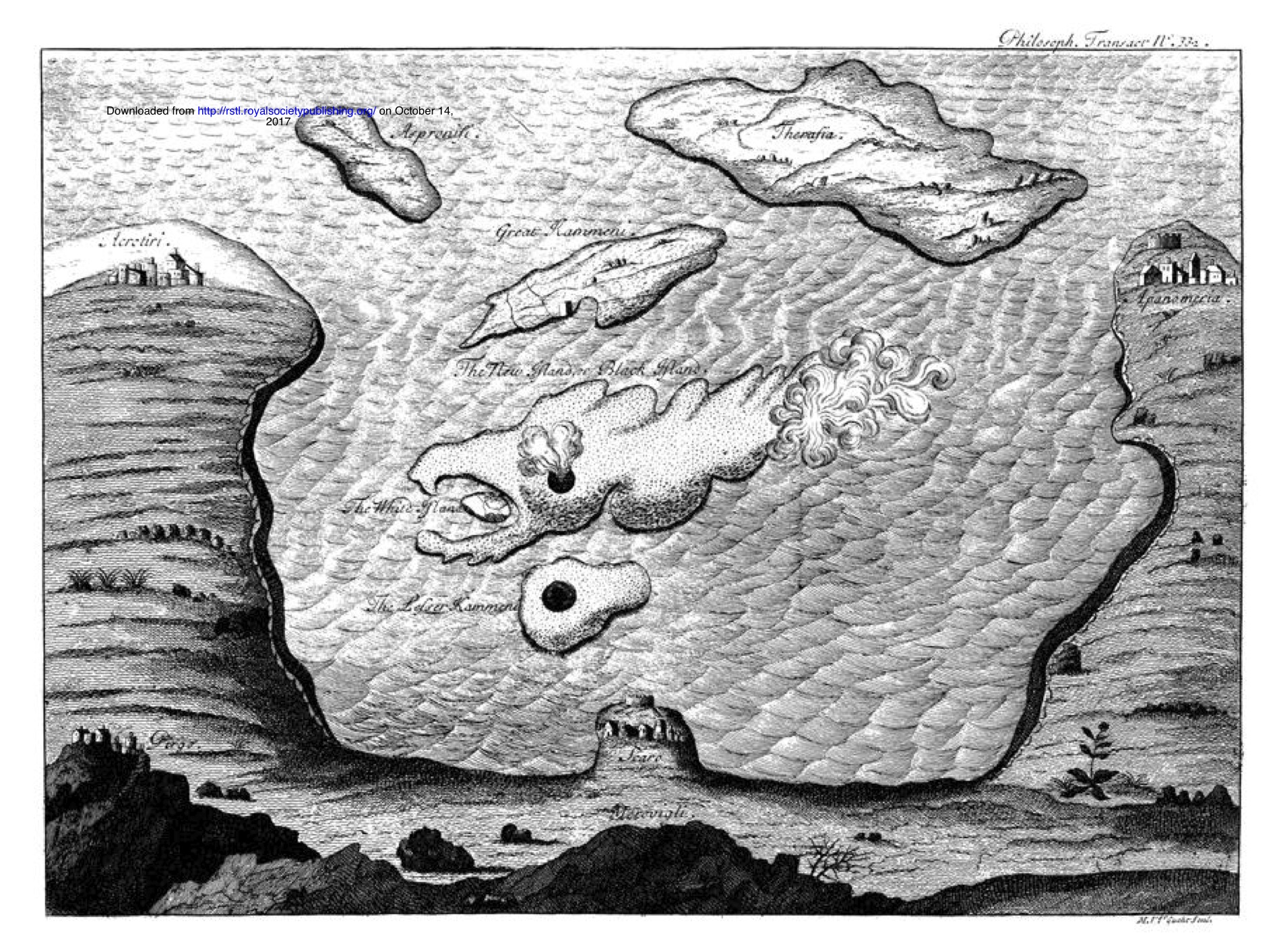
Santorini 1707-1711
The site is structured around ARTICLES (ENTRIES), each devoted to a single image or a group of images. Every article includes an introduction addressing the origin and history of the image, followed by an analytical section focused on the depicted phenomena (e.g. lava flows and products of a specific eruption) and on the scientific theories and interpretations the image may convey (e.g. interpretations of the volcano as a local or global phenomenon). In both sections, the discussion expands—also through links to other entries—from the single image to the author’s broader body of work, as well as to related authors and images.
Articles can be accessed through different navigation modes: AUTHORS, which brings together scientists, artists, and publishers; PHENOMENA AND THEORIES; and PLACES AND ERUPTIONS.
HISTORICAL NARRATIVE
The MISSION page will, in the future, include access to a historical reconstruction. Conceived as a continuous narrative, the text will discuss and integrate the connections identified in the individual articles, to which it will be linked throughout.